

The Ultimate Guide to Rotating Display Stands for UK Exhibitions 2026
In a trade show hall filled with over 400 competing exhibits, the human eye is biologically programmed to ignore the stationary and lock onto movement. You've likely spent thousands on floor space and bespoke graphics, yet the biggest risk to your ROI is a rotating display stand that fails or looks amateurish under the high-pressure environment of a live event. It's frustrating to watch potential leads walk past a high-value product simply because it's sitting still.
We understand that reliability and safety are your primary concerns when planning for the 2026 exhibition season. This guide provides the practical specifications you need to select a robust turntable that eliminates motor burnout and hazardous cable management issues. We'll show you how to integrate motion to increase visitor dwell time by a targeted 40% while ensuring your hardware remains a seamless, professional extension of your brand's presence.
Key Takeaways
- Understand the science of peripheral vision and how motion-based displays trigger an automatic focus response to instinctively draw visitors to your stand.
- Compare professional hardware options, including motorised turntables and heavy-duty bases, to identify the most robust material and mechanism for your product range.
- Learn how to calculate load capacities and torque requirements to ensure your rotating display stand delivers reliable, jerk-free movement throughout the event.
- Discover strategic ways to integrate motion with shell scheme graphic panels and illuminated lightboxes for a seamless, high-impact exhibition presence.
- Gain insights into sourcing professional-grade hardware with rapid UK-wide delivery to meet the demanding deadlines of the 2026 exhibition calendar.
The Strategic Power of Motion: Why Use a Rotating Display Stand?
In the high-pressure environment of a UK trade show, a rotating display stand is a motorised platform engineered to present a product through a continuous 360-degree loop. Unlike static shelving, these units use a low-speed motor to provide a consistent, smooth transition that allows every angle of an item to be visible from a single vantage point. For marketing managers at leading exhibition venues across the UK, this hardware acts as a functional solution to the problem of visual stagnation. It transforms a standard point of sale display equipment setup into a dynamic focal point that captures attention without requiring manual intervention from stand staff.
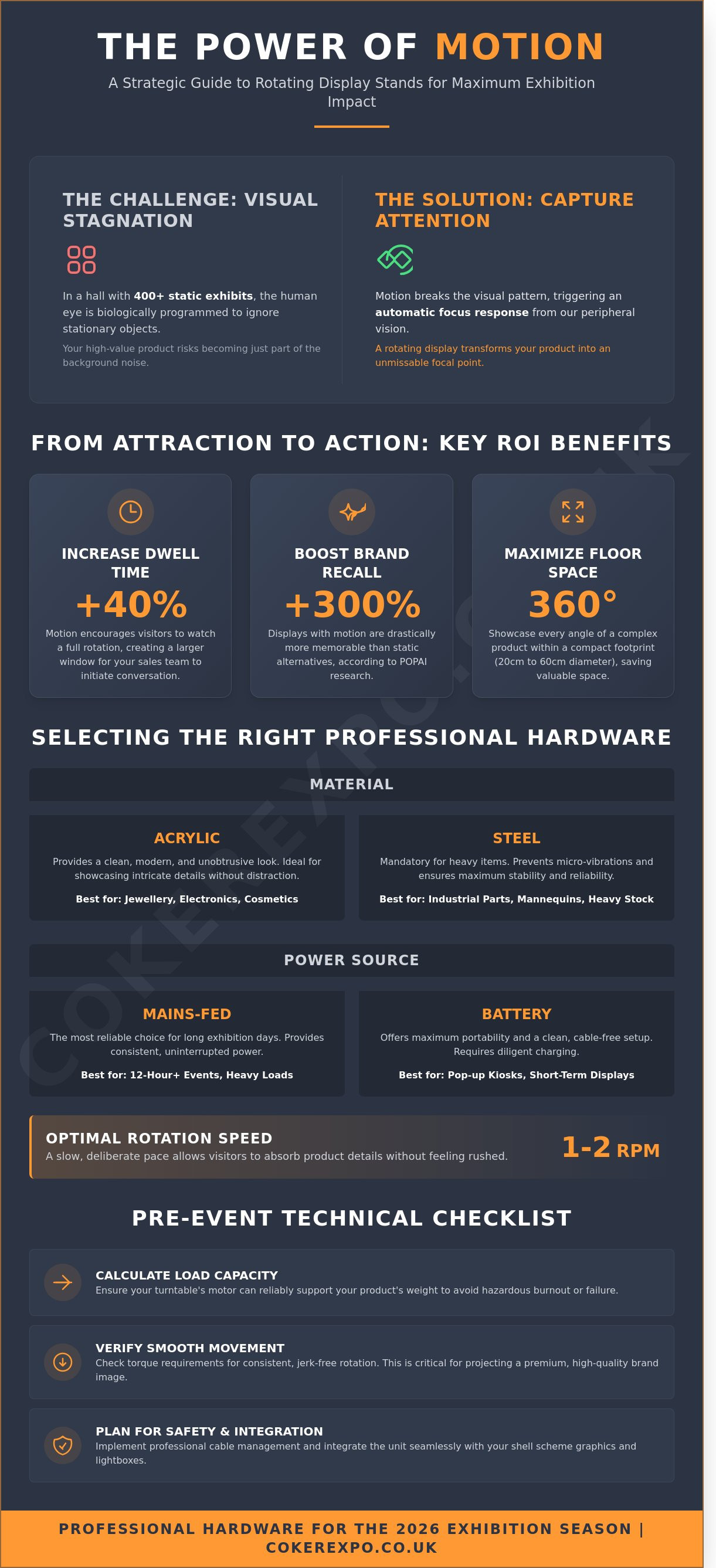
The effectiveness of motion is rooted in human biology. Our peripheral vision is hardwired to detect movement as a priority stimulus, an evolutionary trait that triggers an automatic focus response. In an exhibition hall filled with hundreds of static shell schemes, a moving object breaks the visual pattern. Research from the Point of Purchase Advertising Institute (POPAI) has shown that displays incorporating motion can increase consumer recall by up to 300% compared to static alternatives. This "theatrical" element ensures your brand stands out from neighbours who rely on traditional, unmoving plinths.
Efficiency is another critical factor for the practical exhibitor. Floor space is often restricted to small footprints, such as 3x3 metre stands. A rotating display stand allows you to showcase all sides of a complex product, such as a piece of high-end medical machinery or a detailed architectural model, within a diameter as small as 20cm to 60cm. This eliminates the need for multiple display units, keeping your floor plan clear and professional.
Attracting Footfall and Increasing Dwell Time
Movement naturally encourages visitors to stop and observe for longer cycles. If a product takes 20 seconds to complete a full rotation, the attendee is likely to remain at your stand for that duration to see the "reveal" of the hidden side. This increased dwell time provides your sales team with a larger window to initiate a conversation. There is also a psychological link between controlled motion and premium positioning. Smooth, silent rotation suggests precision engineering and high value, making it a staple for luxury goods and technical B2B components. It allows you to tell a 360-degree product story without the risks associated with visitors handling expensive or fragile samples, such as the limited-edition collectibles available at Koolthings.
Movement as a Narrative Tool
When you use rotation, you control the narrative of the product reveal. It is particularly effective for highlighting intricate details of high-end engineering that might be missed on a flat table. When paired with overhead spotlights, the changing angles create dynamic shadows and light play that add depth and texture to the presentation. Motion should serve the product’s best features, not distract from them. By choosing a rotation speed that matches the complexity of the item, you ensure the movement feels intentional and professional rather than frantic. This focus on craftsmanship and clarity is what separates a successful exhibition stand from a cluttered one.
Comparing Professional Rotating Display Solutions
Selecting the right hardware depends on the weight, environment, and intended interaction of your showcase. A professional rotating display stand acts as a visual anchor, drawing the eye in high-traffic environments. We categorise these solutions into three primary groups: motorised turntables, manual spinners, and heavy-duty mannequin bases. Each serves a distinct purpose in the exhibition ecosystem.
Material choice is your first technical hurdle. Acrylic units are the standard for jewellery and lightweight electronics because they provide a clean, unobtrusive look. When you're displaying industrial components or heavy retail stock, steel construction is mandatory. Steel bases prevent the "chatter" or micro-vibrations that occur when plastic models are pushed to their weight limits. This stability is essential for maintaining a high-end brand image.
Rotation speed is often overlooked but dictates the quality of the user experience. Professional-grade units typically operate at a consistent 1 to 2 RPM. This slow, deliberate pace allows the human eye to track details without feeling rushed. Faster rotation creates visual noise and can cause top-heavy products to wobble. For power, mains-fed units are the reliable choice for 12-hour exhibition days. Battery-powered models offer portability for pop-up kiosks but require a disciplined charging schedule to prevent mid-event failures.
Motorised vs. Manual Display Turntables
Motorised units provide set-and-forget reliability. They're built for all-day operation at trade shows, ensuring your product is always in motion. Manual units are better suited for interactive glass cabinet displays where customers prefer to take control of the viewing angle. For lightweight POS items under 2kg, unpowered friction-based turntables offer a simple, cost-effective way to add movement without needing a power source.
Countertop vs. Floor-Standing Models
Countertop units are designed for eye-level engagement with jewellery, electronics, or promotional literature. They're compact and easy to transport. Floor-standing heavy-duty bases are engineered for scale, often supporting mannequins or large machinery weighing up to 100kg. You must match the platform diameter to the product's base to ensure the centre of gravity stays over the central bearing. If the load is off-centre, the motor's lifespan will drop by as much as 40 percent. You can browse our professional display range to compare load capacities for your specific requirements.
Technical Specifications: Load Capacity and Reliability
Selecting a professional rotating display stand requires a deep dive into mechanical endurance rather than just looking at the surface aesthetics. You must distinguish between static load and rotating load capacities. While a unit might support 75kg while stationary, the internal motor and gearing might only be rated for a 50kg rotating load. Exceeding this limit leads to premature motor failure and stuttered movement that ruins the visual impact of your product.
Reliability is closely linked to heat dissipation. Professional exhibition days often run for 8 or 10 hours without a break. Low-grade motors generate internal heat that degrades lubricants and electrical components over time. High-performance stands use ventilated housings or dedicated heat sinks to maintain a consistent operating temperature. This ensures the motor doesn't seize or lose speed during a high-stakes trade show.
Noise levels are a non-negotiable factor for professional environments. In a quiet gallery or a premium retail space, a grinding or humming motor is a significant distraction. Aim for units that operate below 40 decibels. This silent operation ensures your product remains the sole focus of the audience rather than the hardware supporting it.
Calculating Your Required Weight Capacity
Precision is vital when loading your hardware. You should always choose a stand with a 20% safety buffer above your product total weight. If your item weighs 40kg, your stand should be rated for at least 48kg. This headroom prevents the motor from running at its absolute mechanical limit, which significantly extends its operational lifespan. Torque is the rotational force required to overcome initial friction of a heavy object. Without sufficient torque, the rotating display stand will struggle to start or maintain a consistent speed.
Off-centre loading is the most frequent cause of equipment failure at exhibitions. When a product isn't perfectly balanced, it creates uneven pressure on the internal bearings. This results in a noticeable wobble and puts lateral stress on the drive assembly. We recommend using a spirit level during setup to ensure the load is perfectly centred, protecting your investment from unnecessary wear.
Power Management and Cable Safety
Effective power management is a logistical priority for any event manager. For permanent installations, concealing mains cables within exhibition flooring or hollow plinths is the standard practice. This eliminates trip hazards in public spaces and maintains the clean lines of your brand presentation. For wireless units used in high-traffic zones, look for battery life expectations of at least 12 hours to cover a full show day plus setup time.
Safety in public-facing environments is paramount. Professional-grade stands often incorporate a slip-clutch mechanism. This safety feature allows the turntable to stop moving if someone accidentally grabs it or if an obstruction occurs. It prevents motor burnout and ensures the rotating display stand remains safe for use around children or in crowded retail aisles.
Integrating Motion into Your Exhibition Stand Design
Motion isn't just a visual gimmick; it's a strategic tool for increasing dwell time. By integrating a rotating display stand with shell scheme graphic panels, you create a multi-dimensional environment that breaks the monotony of static rows. The graphic panels provide the essential brand narrative, while the movement of the product acts as the hook that stops foot traffic. This combination ensures your stand remains cohesive rather than looking like a collection of disjointed hardware.
For a high-tech, premium aesthetic, motion should complement your illumination strategy. Pairing turntables with exhibition lightboxes creates a professional glow that eliminates the harsh shadows often cast by moving parts. This setup is particularly effective in high-density halls where you need to cut through the visual noise of competing exhibitors.
Strategic placement is critical. Industry data suggests that the "Golden Circle" of visibility sits in the front-third of your stand space, approximately 1.2 to 1.5 metres from the aisle. Placing your rotating element here maximises the chance of catching a visitor's peripheral vision. However, you must avoid "motion sickness" on your stand. Limiting movement to one primary hero product or a pair of symmetrical smaller units is usually best. Overloading a small 3x3 metre space with multiple spinning elements creates visual chaos and can actually repel potential leads.
Lighting Your Rotating Display
Precision lighting is vital when objects are in motion. Position overhead LED spotlights at 45-degree angles to ensure the product is illuminated from all sides as it turns. This prevents the "flashing" effect caused by light hitting only one face of the item. For glassware or translucent products, use internal-lit turntables to provide a steady glow from beneath. It's also important to match your rotation speed to the environment; a slow 2.5 RPM (revolutions per minute) is ideal for luxury goods, as it prevents light flicker and allows the eye to track details comfortably.
Bespoke Branding and Surface Finishes
The base of your rotating display stand shouldn't be an afterthought. Applying custom 90-micron vinyl graphics to the turntable top ensures brand consistency from every angle. If you're showcasing high-end jewellery or watches, a black velvet finish absorbs excess light and highlights the product's sparkle. Conversely, mirror finishes are excellent for tech products, as they reflect the underside of the device. For a seamless look, we recommend integrating these rotating bases directly into custom-built plinths or counters, hiding the mechanism and leaving only the moving surface visible to the customer.
Ready to elevate your next event with professional motion hardware? Explore our full range of UK-made display solutions at Coker Expo.
Why Choose CokerExpo for Your Rotating Display Hardware
CokerExpo provides more than just equipment; we deliver the structural foundation for your brand's exhibition presence. Every rotating display stand we supply undergoes rigorous testing to ensure it meets the heavy demands of high-traffic trade show environments. We understand that a mechanical failure on the floor isn't just a minor inconvenience; it's a lost opportunity to engage a lead. By focusing on professional-grade hardware, we ensure your products stay in motion without interruption.
Our UK-based operation is built for the high-pressure nature of the events industry. We maintain a fast turnaround for time-sensitive projects, recognising that exhibition deadlines are non-negotiable. If you're preparing for a show at the NEC, ExCeL, or Olympia, our local logistics network provides a reliable safety net that international suppliers can't match. We don't just ship boxes; we provide the "Made in the UK" reliability that marketing managers trust for their most important annual events.
We specialise in integrating motion into complex, large-scale setups. Our team provides expert advice on how to combine heavy-duty turntables with our modular trussing or tension fabric systems. This holistic approach ensures that your rotating display stand works in harmony with your overall booth architecture, creating a seamless and impactful visual experience for every visitor who walks past your stand.
The Practical Specialist Advantage
We vet every piece of hardware for two critical factors: durability and silent operation. High-end retail environments and quiet exhibition halls don't tolerate grinding gears or mechanical hums. Our turntables are selected for their smooth, quiet motors that let your product do the talking. Beyond the motor, we help you navigate the complexities of UK fire safety standards and venue-specific electrical regulations. You gain access to specialists who understand the practical requirements of British event venues, ensuring your infrastructure is fully compliant before you even arrive on-site.
Ready to Elevate Your Display?
Adding movement to a booth can increase visitor dwell time by as much as 40% compared to static exhibits. It's a simple mechanical change that yields measurable results in lead generation and brand recall. Before you finalise your order, run through this final checklist to ensure your hardware matches your requirements:
- Weight: Confirm the total load, including the product and any bespoke plinths, falls within the motor's rated capacity.
- Power: Determine if you require a battery-operated unit for a central island or access to a 240V mains supply.
- Diameter: Ensure the top plate is wide enough to prevent overhanging items from creating a tipping hazard or catching on nearby furniture.
Take the next step in professionalising your exhibit and making a lasting impression. View our range of professional display turntables at CokerExpo and secure the robust hardware you need for your next event.
Secure Your Competitive Edge for the 2026 Trade Show Season
The 2026 UK exhibition circuit demands a shift from static displays to dynamic, high-impact environments. Integrating a robust rotating display stand into your floor plan ensures 360-degree product visibility while capitalising on the natural human response to motion. Success relies on matching technical load capacities to your specific inventory and prioritising hardware that facilitates rapid, tool-free assembly on the day. These systems don't just look professional; they're essential infrastructure for any brand aiming to maximise its return on investment in a crowded hall.
CokerExpo brings over 25 years of UK exhibition expertise to your next project. As authoritative B2B event infrastructure partners, we specialise in providing the reliable hardware required to turn a standard pitch into a high-performance showcase. Our systems are engineered for long-term durability and ease of use, allowing your marketing team to focus on lead generation rather than wrestling with complex setup logistics. It's time to build a stand that works as hard as your sales team does.
Explore Professional Display Turntables and Rotating Stands at CokerExpo
Prepare your inventory for the spotlight and make a lasting impression at your next event.
Frequently Asked Questions
How much weight can a standard motorised rotating display stand hold?
A standard motorised rotating display stand typically supports between 5kg and 50kg depending on the motor torque and platform diameter. For heavier items like automotive parts or mannequins, heavy-duty industrial turntables are available that handle loads exceeding 100kg. Always ensure the weight is centred to prevent motor strain and maintain a smooth, consistent rotation during your event.
Are rotating display stands noisy during operation?
High-quality display turntables operate at noise levels below 50 decibels, which is quieter than a standard office conversation. This ensures the equipment doesn't distract from your sales pitch. It won't interfere with ambient music at a trade show. Our professional-grade motors use precision gearing to eliminate the mechanical grinding sounds often found in cheaper, consumer-grade alternatives. You can confidently use these in quiet gallery settings.
Can I use a battery-powered turntable for a three-day exhibition?
You can use battery-powered units for multi-day events, but you'll need to manage power cycles carefully. Most professional battery-operated stands provide 8 to 12 hours of continuous use on a single charge, meaning you'll need to recharge them overnight. For a three-day exhibition at venues like the NEC or Olympia, we recommend mains power to ensure 100% uptime without the risk of a flat battery mid-afternoon.
What is the ideal rotation speed for showcasing products?
The ideal rotation speed for a rotating display stand is between 1 and 2 revolutions per minute (RPM). This pace is slow enough for visitors to appreciate product details without feeling rushed, yet fast enough to catch the eye from across the hall. Many of our units offer adjustable speed controls, allowing you to fine-tune the movement based on the size and complexity of your item.
Are these stands safe for the public to touch while they are moving?
These stands are safe for public environments because they utilise low-torque motors or integrated clutch mechanisms. If a visitor touches or accidentally stops the platform, the clutch slips to prevent injury and protect the motor from burning out. This safety feature is vital for high-traffic retail spaces. It provides peace of mind for exhibitors in busy public walkways where curious customers might interact with the display.
Can I change the direction of rotation (clockwise vs anti-clockwise)?
Most modern motorised stands feature a simple toggle switch or remote control to change the rotation direction between clockwise and anti-clockwise. This flexibility allows you to align the movement with the flow of foot traffic at your stand. Some advanced models even offer an oscillating mode, where the stand rotates 90 or 180 degrees before reversing, creating a more dynamic visual effect.
Do I need a special technician to set up a rotating display stand?
You don't need a specialist technician to set up these units as they're designed for plug-and-play operation. Most models arrive fully assembled or require simple, tool-free assembly that takes less than 5 minutes. This DIY approach reduces your exhibition overheads. It allows your team to focus on engaging with potential leads rather than managing complex hardware.
How do I hide the power cables for a floor-standing turntable?
To hide power cables for a floor-standing rotating display stand, use low-profile cable ramps or run the wires beneath modular flooring tiles. If you're using a raised platform, you can feed the cable through a pre-drilled hole directly under the unit for a completely seamless look. This prevents trip hazards and maintains the professional aesthetic of your brand's exhibition space.
Leave a comment