

How to Transport Fabric Displays Safely: The Professional Exhibitor’s Guide
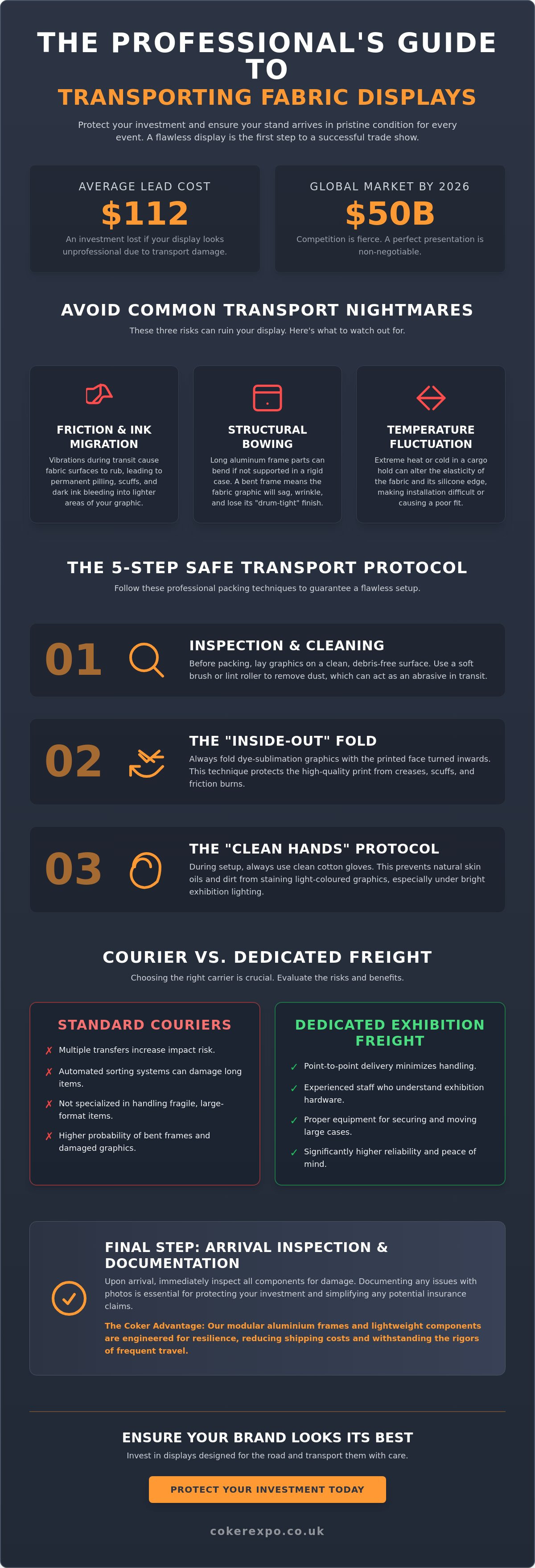
A single lead at a trade show costs an average of $112, but that investment vanishes the moment a prospect sees a stained graphic or a buckled frame. With the global trade show market projected to reach $50 billion in revenue in 2026, the competition for attention is more intense than ever. Learning how to transport fabric displays safely is no longer just a logistical task; it's a vital strategy to protect your brand's professional image and ensure your stand looks brand new at every venue.
It's frustrating to arrive at a show only to discover deep creases in your graphics or bent aluminum components that refuse to slot together. We understand that these setbacks lead to higher replacement costs and unnecessary stress during setup. This guide provides the technical expertise you need to move tension fabric systems and lightboxes with total reliability. You'll learn the specific packing protocols that prevent damage and how to navigate the 2026 EU Packaging and Packaging Waste Regulation to keep your logistics efficient and compliant. We'll break down the process into manageable steps to ensure your hardware and graphics arrive in pristine condition for every event.
Key Takeaways
- Learn the professional "Inside-Out" folding technique for dye-sublimation graphics to eliminate deep creases and protect the printed surface during transit.
- Discover how to transport fabric displays safely by evaluating the risks of standard couriers versus the reliability of dedicated exhibition freight services.
- Implement the "Clean Hands" protocol using cotton gloves to ensure light-coloured graphics remain free from oils and dirt during the high-pressure setup phase.
- Understand how modular aluminium frames and lightweight components reduce shipping costs while providing a more resilient structure for frequent travel.
- Master the essential inspection and documentation steps required to protect your investment and simplify insurance claims if transit damage occurs.
The Logistics of Professionalism: Why Fabric Display Protection Matters
A trade show is a high-stakes environment where your physical presence serves as the primary indicator of your brand's operational quality. With the global trade show market projected to reach $50 billion in revenue in 2026, the cost of a logistical failure is higher than ever. Every component of a TFS tension fabric system or a professional lightbox is engineered for high impact, but that impact depends entirely on the system's condition upon arrival. Understanding how to transport fabric displays safely is the difference between a stand that commands the room and one that looks like an afterthought. While a damaged frame can often be hidden, a torn or stained fabric graphic is impossible to ignore.
Fabric displays require a fundamentally different logistical approach than traditional PVC panels. While PVC is rigid and prone to surface cracking, tension fabric is porous and relies on precise frame geometry to achieve its signature "drum-tight" finish. If an aluminium extrusion is bent even slightly during transit, the tension is lost, resulting in unsightly sagging or wrinkles that no amount of on-site steaming can fix. Beyond the fabric, modern systems often include integrated LED components and dynamic lightbox electronics. These technical elements are sensitive to the vibrations and impacts common in standard courier networks, making specialized protection a non-negotiable requirement for the professional exhibitor.
Protecting Your Investment and Brand ROI
The financial logic of trade shows is compelling; companies report an average ROI of $20.98 for every $1 spent. However, this return depends on your ability to convert the 81% of attendees who have the authority to make purchasing decisions. A single deep crease across your primary brand message can undermine a premium stand design in seconds. Effective trade show logistics involve more than just moving boxes; it's about preserving the lifecycle of your hardware. Investing in high-quality transit cases and following strict packing protocols significantly lowers your long-term replacement costs. It also eliminates the high-pressure stress of discovering damage hours before the doors open, allowing your team to focus on lead generation rather than emergency repairs.
Common Transport Risks for Fabric Systems
Transporting these systems exposes them to several specific mechanical and environmental risks that can degrade their quality over time:
- Friction Burns and Ink Migration: Constant vibrations during transit can cause fabric surfaces to rub against each other or the frame. This friction can lead to permanent "pilling" or ink migration, where dark colours bleed into lighter areas of the graphic.
- Structural Bowing: Long aluminium extrusions are susceptible to bowing if they aren't supported correctly within a rigid case. Once an extrusion loses its straight edge, the fabric graphics will no longer fit the perimeter channel accurately.
- Temperature Fluctuations: Extreme heat or cold in a cargo hold can affect the elasticity of the silicone edge gaskets (SEG) and the fabric itself. This can make the graphics either too loose or too difficult to install during the setup phase.
By identifying these risks early, you can implement packing strategies that ensure your display remains a sound business investment for years to come.
Pre-Transport Preparation: Packing Fabric and Hardware for 2026 Standards
Preparation is the most critical phase of the logistics chain. If a display is packed incorrectly, even the most careful freight carrier cannot prevent damage. Following a standardized protocol for how to transport fabric displays safely ensures that every component is protected from the mechanical stresses of transit. A systematic approach to packing doesn't just prevent damage; it also streamlines the setup process at the venue, allowing your team to work with speed and confidence.
- Step 1: Inspection and Cleaning. Before packing, lay graphics on a clean, debris-free surface. Use a soft brush or lint roller to remove dust that could act as an abrasive when the fabric is compressed.
- Step 2: The 'Inside-Out' Fold. Always fold dye-sublimation graphics with the printed face turned inwards. This protects the primary brand image from surface scratches, dirt, or accidental snags during the packing process.
- Step 3: Hardware Segregation. Metal components and fabric should never share the same compartment. Residual manufacturing oils or microscopic metal shavings from aluminium extrusions can cause permanent staining if they come into contact with the graphics.
- Step 4: Foam Interleaving. For powder-coated aluminium frames, use foam sleeves or interleaving sheets. This prevents metal-on-metal friction, which leads to unsightly chips and scratches that undermine the stand's premium feel.
- Step 5: Inventory Verification. Use a master packing list to confirm every connector, base plate, and cable is present. Label each case clearly with its contents to avoid confusion during the high-pressure setup environment.
Graphic Care: Folding vs. Rolling Tension Fabric
Rolling is an effective method for smaller banners, but large-format tension fabric systems require a more nuanced approach. Rolling a three-meter graphic creates a bulky, unmanageable cylinder that is easily crushed in a crowded cargo hold. Instead, fold these large graphics loosely using the inside-out method. To prevent ink migration or "ghosting" in high-heat transit environments, place sheets of acid-free tissue paper between the folds. This provides a critical barrier that preserves the vibrancy and clarity of your print.
Hardware Protection: Shielding Frames and Lightbox LEDs
The internal electronics of exhibition lightboxes are particularly sensitive to the constant vibrations of road and air travel. Ensure all LED modules are securely fastened within the frame profiles and use padded dividers to isolate power supplies and sensitive cables. The silicone edge gasket (SEG) is the most delicate part of the graphic; if it's deformed or coated in grit, the fabric won't sit flush in the frame. Store graphics in sealed polyethylene bags to maintain the integrity of the gasket. While standard padded bags are suitable for local transport, custom flight cases are a better business investment for frequent exhibitors. If you need hardware built for the rigours of the road, you can browse our specialist transport-ready displays for a more resilient solution.
Evaluating Transport Methods: From Couriers to Dedicated Freight
Choosing the right carrier is a strategic decision that affects both your budget and your brand's physical appearance. While you've mastered the packing phase, the method of transit determines if those efforts were successful. When deciding how to transport fabric displays safely, you must weigh the convenience of standard couriers against the total reliability of specialist event hauliers. The goal is to eliminate the "last mile" risks that occur between the delivery vehicle and your booth space.
Standard UK couriers are often the most cost-effective choice for smaller, portable items like folding display boards. However, they come with significant handling risks. Automated sorting hubs and frequent manual transfers increase the likelihood of impact damage. For larger exhibition stand design projects, dedicated exhibition logistics are the professional standard. These services offer "site-to-stand" delivery, bypassing the chaotic loading docks and delivering your equipment directly to your booth. This prevents the common damage caused by inexperienced general site labourers during the drayage process.
For multi-component truss truss systems, palletisation is the safest method. Securing hardware to a pallet ensures it's handled exclusively by forklifts; this significantly reduces the risk of dropping or crushing compared to manual lifting. It also keeps all components together, preventing the problem of "split shipments" where half your stand arrives while the rest is stuck in a distribution centre. Insurance is another critical factor. While carriers offer basic liability, it rarely covers the full replacement value of a high-end fabric system. Short-term exhibitor insurance for a single event typically costs between $50 and $150, which is a small price to pay for total peace of mind.
Comparing Transport Options for Exhibition Stands
The best method depends on the scale of your infrastructure. Courier services work well for lightweight kits, but they have strict size limits that often exclude long aluminium extrusions. Specialist event hauliers are better equipped for heavy or oddly shaped cases, providing a level of care that general couriers cannot match. If you choose self-transport, ensure your vehicle is appropriately rated for the load. Use heavy-duty ratchet straps to secure cases against the bulkhead; sudden braking can turn an unsecured flight case into a projectile that damages both the vehicle and the display hardware.
International vs. National Transport Logistics
Exhibiting overseas adds layers of complexity, particularly regarding customs and documentation. In 2026, navigating ATA Carnets is essential to avoid paying import duties on equipment that will eventually return home. For air freight, the internal protection of your cases is paramount. Real-time tracking technology, such as IoT tags, allows you to monitor not just the location of your stand, but also any significant impacts or temperature shifts during the journey. This data is invaluable for documenting transit damage for insurance claims before you even set foot in the venue.
On-Site Arrival: Safe Unpacking and Emergency Maintenance
The moment your cases arrive at the booth, the focus shifts from logistical protection to aesthetic perfection. Understanding how to transport fabric displays safely is only half the battle; the unpacking process is where many exhibitors inadvertently cause damage. With 68% of attendees visiting specifically to see new products, your display must look flawless to capture their interest during the 5.5 hours they typically spend on the show floor. Efficient on-site management ensures that the pristine condition you worked to preserve during transit is maintained through to the final assembly.
- The 'Clean Hands' Rule: Natural oils and dirt from your skin can leave permanent marks on light-coloured graphics. Always use white cotton gloves when handling dye-sublimation fabrics to prevent fingerprint transfer.
- Immediate Inspection: Check all components for transit damage as soon as they're unpacked. Document any issues with high-resolution photos immediately; this is essential for supporting insurance claims, especially since single-event policies often require prompt notification of loss.
- The 24-Hour Tension Rule: Fabric is a living material that needs time to 'relax' into the frame. Install your graphics as early as the build schedule allows. This gives the tension system time to pull out minor packing ripples naturally.
- The Professional Toolkit: Never arrive without a dedicated maintenance kit. This should include a portable steamer, lint rollers, microfibre cloths, and a set of hex keys for frame adjustments.
Removing Creases and Marks Without Damage
Even with the best packing, minor creases are sometimes unavoidable. Use a handheld steamer on the reverse side of the fabric to relax the fibres without risking water spots on the printed face. Keep the steamer moving constantly to avoid heat build-up. For surface scuffs or floor dust, a dry microfibre cloth or a lint roller is usually sufficient. In dry exhibition hall environments, static cling can attract dust to your graphics. Using an anti-static spray on the frame before fitting the fabric can significantly reduce this problem and keep the display looking sharp.
Component Assembly Safety
Before you begin assembling your shell scheme graphic panels, lay out a clean plastic sheet or floor protection. This prevents the bottom edge of the fabric from picking up grease or debris from the venue carpet during installation. Pay close attention to 'pinch points' when connecting aluminium extrusions; misaligned joints can scratch the finish or snag the fabric. For backlit displays, ensure all power cables are routed through the designated internal channels. This prevents the cables from casting shadows on the graphic and protects them from being crushed by the frame during the final tightening. By mastering how to transport fabric displays safely and following these unpacking protocols, you ensure your stand reflects the quality of your brand. If you're planning your next show, view our range of transport-resilient exhibition systems to simplify your on-site logistics.
The Coker Advantage: Displays Engineered for the Road
Successful exhibiting requires infrastructure that can withstand the rigours of the road without compromising on visual impact. At CokerExpo, we engineer our systems with the understanding that how to transport fabric displays safely is just as important as how they look on the stand. Our modular design philosophy breaks down large-scale structures into smaller, manageable components. This approach significantly reduces the risk of structural damage during transit and allows for more efficient packing in standard vehicles or flight cases. By reducing the physical footprint of the hardware, we help you navigate the complexities of exhibition logistics with total reliability.
We use high-grade, lightweight aluminium for our frames. This choice provides the necessary strength to maintain the high tension required for a professional finish while keeping shipping weights to a minimum. Since the average cost to ship trade show materials can range from $2,000 to over $10,000 depending on size and weight, choosing lightweight hardware is a direct investment in your bottom line. Our tool-free assembly systems further protect your investment. By removing the need for screwdrivers or wrenches near the fabric, we eliminate the risk of accidental punctures or snags during the high-pressure build phase at the venue.
Hardware Built for Frequent Transit
Our TFS tension fabric systems are designed to balance high-tension aesthetics with a rapid, logical breakdown process. We apply durable powder-coated finishes to our hardware to resist the scuffs and scratches often encountered in busy loading docks or during palletisation. For those using illuminated branding, our integrated LED technology protects sensitive electronics by housing them securely within the frame profiles. This reduces the vulnerability of lightbox components compared to traditional external lighting solutions, ensuring your brand remains illuminated and impactful at every show. To further safeguard your kit, we offer custom transit solutions, including padded bags and rigid flight cases specifically designed for Coker hardware.
Support Beyond the Sale
Choosing the right hardware is only the first step in a successful exhibition strategy. Our Hampshire-based team provides expert advice on the best packing and logistics protocols for your specific system. We understand the deadline-driven nature of the industry and prioritize the durability of our physical products to ensure they represent a sound business investment. We also offer replacement graphic services, allowing you to refresh your brand message or replace worn graphics without the expense of a completely new frame system. Explore our range of portable, road-ready fabric displays today to see how professional engineering can simplify your exhibition logistics and lower your long-term costs.
Mastering Your Exhibition Infrastructure
Protecting your brand’s physical presence requires a disciplined approach to logistics and hardware selection. You now understand that maintaining a pristine stand begins with precise packing techniques and ends with careful on-site assembly. By implementing these professional standards for how to transport fabric displays safely, you eliminate the risks of creased graphics and damaged frames that often plague inexperienced exhibitors. These strategies ensure your stand remains a high-performance business asset rather than a logistical liability.
At CokerExpo, we've been refining expert UK manufacturing since 1999 to provide the essential infrastructure for your success. Our systems feature durable, tool-free assembly designs that minimize the risk of damage during the high-pressure build phase. We also provide specialist flight cases for all our systems to offer maximum protection during transit. Secure your next event with CokerExpo’s road-ready display systems and experience the confidence of a stand that looks brand new for every show. Your next successful exhibition starts with hardware built for the rigours of the road.
Frequently Asked Questions
Can I wash my fabric display graphics if they get dirty during transport?
Yes, most dye-sublimation graphics are machine washable. Use a cool cycle at 30°C with a mild, non-biological detergent to remove surface dirt or oils. You should avoid bleach and tumble drying at all costs. For the best results, hang the graphics to air dry while they are still slightly damp; this allows the weight of the fabric to pull out minor wrinkles naturally.
What is the best way to fold a large tension fabric graphic?
The most effective method is the "inside-out" fold. This technique ensures the printed face is protected from external scuffs and snags during the packing process. Fold the graphic loosely into a rectangular shape that fits your transit case without forcing it. If the display will be in transit for several days, place acid-free tissue paper between the folds to prevent ink transfer.
How do I prevent my aluminium frame from scratching the fabric?
Hardware and graphics must always be stored in separate compartments. Use foam interleaving or protective sleeves for the aluminium extrusions to prevent metal-on-metal friction during transit. This prevents microscopic metal shavings or manufacturing oils from transferring to the porous fabric. Ensuring your hardware is clean before packing is a vital step in how to transport fabric displays safely and maintaining a professional appearance.
Are LED lightboxes safe to ship via standard courier services?
Standard couriers represent a high risk for LED lightboxes due to the mechanical shocks in automated sorting hubs. While portable kits can survive in rigid cases, specialized exhibition freight is the safer choice for larger systems. If you must use a courier, ensure all LED modules are internally secured and the entire frame is housed in a high-impact flight case with custom foam inserts.
What should I do if my display arrives damaged at the venue?
Document the damage immediately with high-resolution photographs before moving the cases from the delivery point. Note the specific damage on the carrier's delivery receipt and notify your insurance provider right away. Many event-specific insurance policies require notification within 24 hours to process a claim. Contact your hardware provider to see if they can overnight critical replacement components to the show site.
Do I need a special case for my fabric display, or is the original box enough?
Original cardboard packaging is rarely sufficient for more than one or two journeys. For professional exhibitors, a custom flight case or a high-density polyethylene transit case is a necessary investment. These cases are engineered to withstand the stacking and impact stresses of how to transport fabric displays safely over multiple years, protecting both the sensitive electronics and the tension fabric graphics.
How do I remove deep creases from a tension fabric display on-site?
Use a handheld steamer on the reverse side of the fabric once it is fully installed in the frame. The tension of the system works with the steam to relax the polyester fibres and pull out creases. Keep the steamer head moving constantly to avoid heat build-up in one area. Never use a traditional iron directly on the printed surface as this can melt the synthetic fibres.
Is it better to ship my stand to the venue or my hotel?
Shipping to an advance warehouse or directly to the venue is the standard professional choice. Venues have the infrastructure, such as loading docks and forklifts, to handle heavy exhibition cases. Hotels often lack adequate storage space and may charge significant handling fees. Furthermore, venue staff are familiar with trade show logistics, which reduces the risk of your equipment being misplaced during the final delivery phase.
Leave a comment