

How to Choose Exhibition Flooring: The Professional Guide for UK Exhibitors (2026)
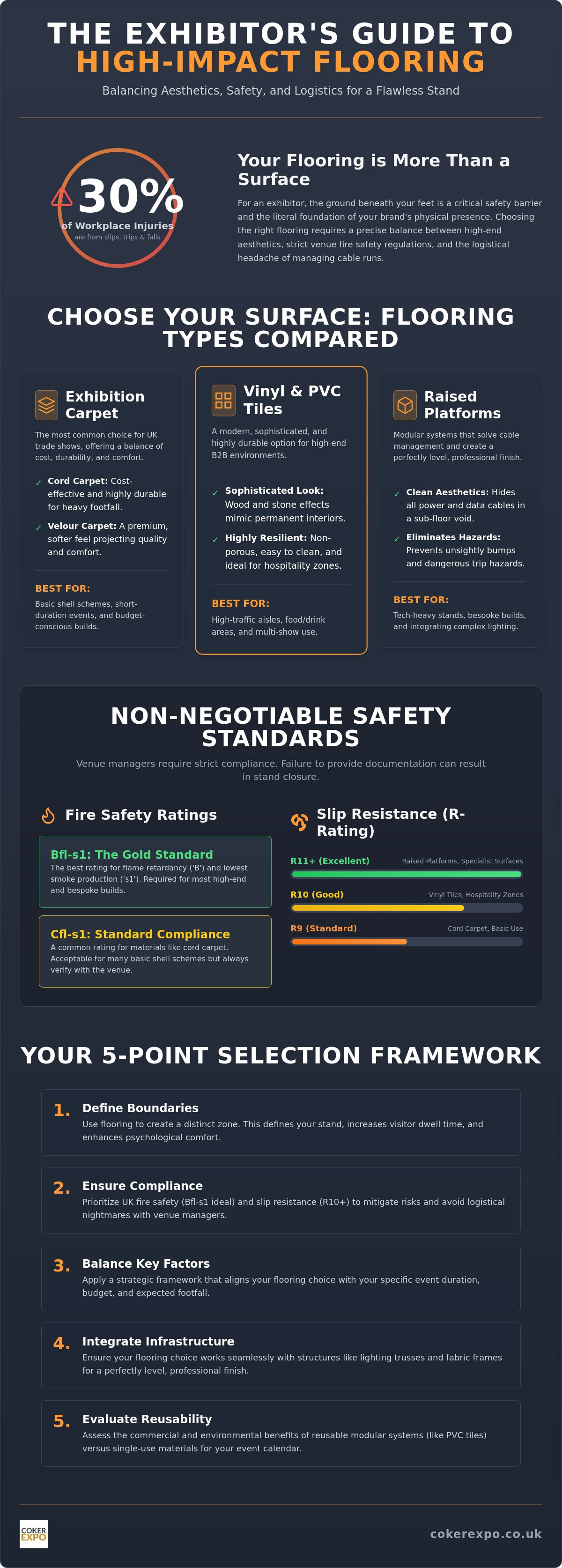
Did you know that slips, trips, and falls account for over 30% of all workplace injuries in the UK according to 2025 reports? For an exhibitor, the ground beneath your feet is more than just a surface; it's a critical safety barrier and the literal foundation of your brand's physical presence. We understand that the pressure to create a standout environment often clashes with the stress of strict venue fire safety regulations and the logistical headache of managing cable runs. Learning how to choose exhibition flooring requires a precise balance between high-end aesthetics and the pragmatic demands of the 2026 event landscape.
You need a solution that eliminates hidden installation costs while ensuring full compliance with the industry's eGuide standards. This professional guide will help you master the technical and aesthetic criteria for selecting surfaces that enhance brand impact. We'll break down the specific benefits of materials like vinyl and raised platforms, explain how to manage complex wiring for powered displays, and provide a clear framework for meeting UK safety requirements. You'll gain a logical plan to transform a standard shell scheme or space-only plot into a distinct, high-performance environment that represents a sound business investment.
Key Takeaways
- Define your stand’s physical boundaries to increase visitor dwell time and psychological comfort within your branded environment.
- Ensure total compliance with UK fire safety standards and R-rated slip resistance to mitigate logistical risks and protect your investment.
- Apply a strategic framework on how to choose exhibition flooring to balance your specific event duration, budget, and expected footfall.
- Integrate your flooring choice with structural infrastructure like lighting truss and fabric frames to ensure a level, professional finish.
- Evaluate the commercial and environmental benefits of reusable modular systems versus single-use materials for your 2026 event calendar.
Understanding the Impact and Types of Exhibition Flooring
Exhibition flooring acts as the physical boundary that separates your branded space from the neutral venue aisles. It's a modular, temporary surface specifically designed to withstand high-traffic event environments. For a technical overview of flooring materials, you can see how industrial standards apply to these temporary structures. Beyond aesthetics, flooring directly influences visitor psychology. By creating a distinct "zone," you signal to attendees that they've entered your environment. This psychological shift often increases "dwell time," giving your team more opportunities to engage. Learning how to choose exhibition flooring is the first step in building a stand that feels like a professional, authoritative environment rather than just a temporary booth.
To make an informed decision, you must categorise your options into three primary groups: exhibition carpet, vinyl or PVC tiles, and modular platform systems. Each category offers specific advantages for brand impact and logistical efficiency.
Exhibition Carpet: Textures and Brand Perception
Exhibition carpet remains the most common choice for UK trade shows. Cord carpet is a cost-effective, high-durability option that performs well under heavy footfall. For a more premium aesthetic, Velour provides a deeper pile and a softer feel, projecting a sense of quality and comfort. You can use the "platform effect" by selecting a carpet colour that contrasts sharply with the venue's aisle carpet. This clearly defines your stand perimeter. Ensure your colour choice complements your shell scheme graphic panels to create a unified brand experience.
Vinyl and PVC Tiles: Modern Durability
Vinyl and PVC options are increasingly popular in high-end B2B environments. Wood-effect and stone-effect vinyl provide a sophisticated look that mimics permanent retail interiors. Interlocking PVC tiles are particularly practical for exhibitors who attend multiple shows per year. They offer rapid installation and are highly resilient. If your stand involves hospitality or serving food and drinks, vinyl is the superior choice. It's non-porous, easy to clean, and maintains a professional appearance even after spills. This durability makes it a sound long-term business investment for your event infrastructure.
Technical Specifications: Safety, Durability, and Cable Management
Technical specifications are the invisible pillars of a successful stand. When you evaluate how to choose exhibition flooring, safety compliance must be your non-negotiable starting point. Venue managers in the UK operate under strict health and safety frameworks. Failing to provide documentation for your materials can result in a forced stand closure before the doors even open. Integrating these exhibition floor design strategies ensures that technical compliance doesn't compromise visual appeal. Selecting high-quality exhibition flooring that meets these standards protects your staff and visitors alike.
| Material Type | Fire Class | Slip Resistance | Best Use Case |
|---|---|---|---|
| Cord Carpet | Cfl-s1 | R9 | Basic shell schemes and short durations |
| Vinyl Tiles | Bfl-s1 | R10 | Hospitality zones and high-traffic aisles |
| Raised Modular Platform | Bfl-s1 | R11+ | Tech-heavy stands and bespoke builds |
Navigating Fire Safety Ratings (Bfl-s1 vs. Cfl-s1)
Bfl-s1 is widely considered the gold standard for flame retardancy and low smoke production in the event industry. Venue managers require certificates of conformity to prove that your flooring won't contribute significantly to a fire. In this classification system, "B" represents the material's reaction to fire class and "s1" denotes the lowest possible smoke production levels. Always verify these ratings with your supplier to avoid last-minute logistical hurdles during the build phase.
Cable Management and Raised Platforms
Managing power cables is a persistent challenge for modern exhibitors. Taping cables down is a common but flawed approach; it creates unsightly bumps and significant tripping hazards. Raised flooring systems solve this by using modular platforms that create a void beneath the surface. This space allows for invisible, safe power distribution across your entire footprint. This is especially critical when integrating power for lightboxes through flooring voids. A level, raised floor provides the necessary infrastructure for complex electronic displays while maintaining a clean, professional aesthetic that reinforces your brand's reliability.
The Selection Framework: Matching Flooring to Your Event Strategy
Strategic planning is essential when determining how to choose exhibition flooring for your specific business goals. Your selection should align with your broader exhibition stand design to ensure the floor supports the overall architectural message. A decision-making matrix helps balance event duration, budget, and footfall while considering the environmental impact of your choices. For many exhibitors, the reusability vs. disposal debate is a priority. While single-use carpets are convenient for one-off shows, modular systems represent a better long-term investment for those attending multiple events annually. You can explore our full range of exhibition flooring solutions to find a system that fits your recurring event calendar.
Duration and Footfall Analysis
Short-duration events lasting one or two days typically favour cord carpet or thin vinyl. These materials are lightweight and efficient to install for a brief presence. However, if your strategy involves a multi-show calendar, investing in reusable interlocking tiles or modular systems is more cost-effective. Footfall analysis is also critical. Light-coloured carpets are a significant risk for high-traffic main aisles as they show dirt and wear almost immediately. Choosing darker shades or patterned vinyl helps maintain a professional appearance throughout the entire show.
Logistics and Installation Efficiency
Logistics often dictate the feasibility of a flooring choice. You must compare the "roll" format of traditional carpet and vinyl against the "crate" format of modular tiles. Transport volume and weight directly impact your shipping costs and storage requirements. Additionally, consider the man-hours required for installation. While some systems allow for DIY installation with basic tools like double-sided tape, safety knives, and edging strips, others require more technical expertise. For complex, large-scale stands, professional event management services ensure a flawless finish while alleviating the logistical pressure on your team.
In a similar vein, when managing permanent warehouse logistics or industrial facilities, you can explore production, installation and service of industrial doors and loading systems to streamline operations and maintain high safety standards.
The weight of the material also affects handling. Heavy-duty rubber or thick PVC tiles provide excellent durability but require more effort to transport and lay. Conversely, lightweight foam-backed tiles offer comfort and ease of assembly, though they may lack the resilience needed for heavy machinery or high-density visitor traffic. Balancing these practical factors ensures your flooring remains an asset rather than a logistical burden.
Seamless Integration: Combining Flooring with Display Infrastructure
Successful stand design requires a holistic approach where the surface beneath your feet supports the hardware above it. Understanding how to choose exhibition flooring involves more than just picking a colour; it requires a technical understanding of how different surfaces interact with your hardware. A floor that shifts or compresses under pressure can compromise the alignment of tension fabric systems or the safety of overhead displays. Integrating your surface choice with your display infrastructure creates a cohesive, high-impact environment that functions as a single, unified unit. This synergy is what separates a professional branded space from a generic trade show booth.
Supporting Structural Hardware
Your floor must provide a stable foundation for heavy truss systems and aerial displays. If you use a raised platform, ensure the substructure can handle the concentrated loads of truss base plates without warping or dipping. Flooring also serves a practical aesthetic purpose by concealing the heavy metal bases of freestanding fabric frames, providing a cleaner finish. Additionally, a perfectly level substrate is an absolute necessity for the smooth operation of rotating display turntables. Even a minor incline can cause mechanical strain, noise, or vibration, which detracts from the professional atmosphere of your stand.
Defining Zones with Texture and Colour
Experienced exhibitors use flooring to guide visitor behavior and define functional areas. You can use different textures to separate a quiet meeting zone from a high-energy product demo zone. For example, a plush velour carpet in a lounge area creates a physical and acoustic contrast to a hard-wearing vinyl demo floor, while specialized safety solutions from SoftplayToys4kids are ideal for exhibitors creating dedicated family-friendly or interactive play zones. Coordinating these floor colours with the LED output from dynamic lightboxes enhances the immersive effect of your stand, making the entire space feel like a bespoke environment. To ensure a professional finish, you must also use flooring to highlight "hero" products on branded display plinths. Finally, always include ramped edging when transitioning from the venue aisle to a raised stand surface to ensure accessibility and eliminate trip hazards.
Final Professional Checklist for UK Exhibitors:
- Verify fire safety certificates (Bfl-s1 or Cfl-s1) with your supplier before the event.
- Confirm the floor load-bearing capacity for heavy hardware, plinths, or machinery.
- Ensure cable voids in raised platforms are sufficient for all planned power and data runs.
- Check that colour choices complement your shell scheme or bespoke graphics under venue lighting.
- Plan for ramped edging on all open sides to meet UK accessibility and safety standards.
Building Your Foundation for Success in 2026
Selecting the right surface is a strategic decision that impacts safety, brand perception, and logistical efficiency. You now understand that technical ratings like Bfl-s1 are non-negotiable for UK venue compliance and that raised platforms provide the essential infrastructure for seamless cable management. Mastering how to choose exhibition flooring ensures your stand remains a professional, high-performance environment throughout your 2026 event calendar. It's the difference between a temporary booth and a resilient brand destination.
With over 25 years of UK exhibition expertise, we provide the reliable infrastructure needed for your success. We're specialists in high-impact lightbox and truss integration, offering in-house event management and planning services to handle every bespoke request. Our goal is to alleviate your logistical stress by providing hardware that represents a sound business investment. Explore our full range of exhibition flooring and display solutions to secure your stand's foundation today. Your next successful exhibition starts from the ground up.
Frequently Asked Questions
What is the most cost-effective flooring for a one-off exhibition?
Cord carpet is the most cost-effective flooring for a one-off exhibition. It provides a clean, uniform appearance at the lowest entry price point for UK exhibitors. While it lacks the premium pile of velour, its durability is more than sufficient for the duration of a standard three-day trade show. This material is typically treated as a single-use item, which simplifies the breakdown process and reduces your post-event logistics.
Do I need to hire a professional to install my exhibition carpet?
Professional installation isn't strictly required for basic materials like cord carpet or interlocking PVC tiles. Most stand managers can handle DIY installation using double-sided exhibition tape and a safety knife. However, for raised platform systems or large-scale bespoke footprints, professional event management services are recommended. Expert fitters ensure a perfectly level finish and handle the technical aspects of ramped edging and complex cable routing.
What fire safety certificates do UK venues usually require for flooring?
UK venues require a Certificate of Conformity proving that the material meets Bfl-s1 or Cfl-s1 fire safety standards. These specific classifications confirm the material's flame retardancy and low smoke production levels. You must have these documents available for inspection by venue health and safety officers during the build phase. Failing to provide valid certification can lead to the immediate removal of your flooring to maintain venue compliance.
Can I reuse exhibition carpet for multiple trade shows?
Reusing standard exhibition carpet is generally impractical due to adhesive residue and physical wear from heavy footfall. Removing the low-tack tape often damages the backing, making it difficult to relay the material with a professional finish. If reusability is a core part of your event strategy, you should invest in interlocking PVC or modular carpet tiles. These systems are designed for multiple assembly cycles and represent a more resilient business investment.
How do I hide electrical cables under my exhibition flooring safely?
The safest way to hide electrical cables is to use a raised modular platform system. This creates a dedicated void beneath the surface, allowing for invisible and hazard-free power distribution to your counters and lightboxes. If a raised floor isn't feasible, you must use high-visibility safety tape or dedicated cable ramps to secure wires. Understanding how to choose exhibition flooring that incorporates these cable management features is essential for stands with multiple powered displays.
Which flooring is best for a stand with heavy display equipment?
Interlocking PVC tiles or reinforced modular platforms are the best choices for stands with heavy display equipment. These materials offer high compressive strength and won't indent under the weight of machinery or large branded plinths. For the most demanding loads, a raised floor with a high-density timber or steel substructure provides the necessary resilience. Always confirm the specific weight-loading capacity with your supplier to ensure the floor remains stable and level throughout the event.
Leave a comment