

Exhibition Stand Design: The Professional Guide to Impact and ROI in 2026
The traditional model of commissioning £10,000 one-off bespoke builds is becoming an obsolete legacy expense that modern marketing budgets can no longer justify. You likely recognize the frustration of watching a significant portion of your annual spend literally go into a skip after a three-day event. Effective exhibition stand design in 2026 requires a shift toward modular, high-performance systems that work as hard as your sales team.
It is stressful enough navigating UK fire and safety regulations and tight load-in windows without worrying if your hardware will actually fit the space or look generic. We understand that you need a professional, robust presence that doesn't require a specialist team or a toolbox to assemble. This guide teaches you how to master the principles of reusable design to maximize lead generation while significantly reducing your logistical headaches. We will examine the technical specifications of tension fabric, tool-free assembly, and the strategic layouts that ensure your brand stands out in a crowded hall.
Key Takeaways
- Learn how to align your stand’s architecture with specific business objectives, ensuring your presence prioritises either direct lead generation or brand awareness.
- Evaluate the commercial advantages of bespoke builds versus modular systems to achieve a versatile and high-impact exhibition stand design.
- Master the "moth effect" by integrating professional lighting and structural engineering into the design phase to naturally attract and guide visitors.
- Implement the "Zoning" model and the "3-Second Rule" to ensure your value proposition is communicated instantly to busy trade show attendees.
- Navigate the UK production landscape with a professional roadmap that covers everything from 3D renders to managing local lead times and final hardware selection.
Defining Strategic Exhibition Stand Design in 2026
In the high-stakes environment of UK trade shows, effective exhibition stand design is no longer just about making a space look attractive. It represents the strategic intersection of brand architecture, visitor psychology, and structural engineering. The process of developing an exhibit must start with a clear, objective-led strategy. Whether your goal is high-volume lead generation or top-of-funnel brand awareness, every square metre must serve a purpose. In 2026, the UK market demands immediate brand recognition; visitors at venues like the NEC or ExCeL often decide to engage or bypass a stand in under three seconds.
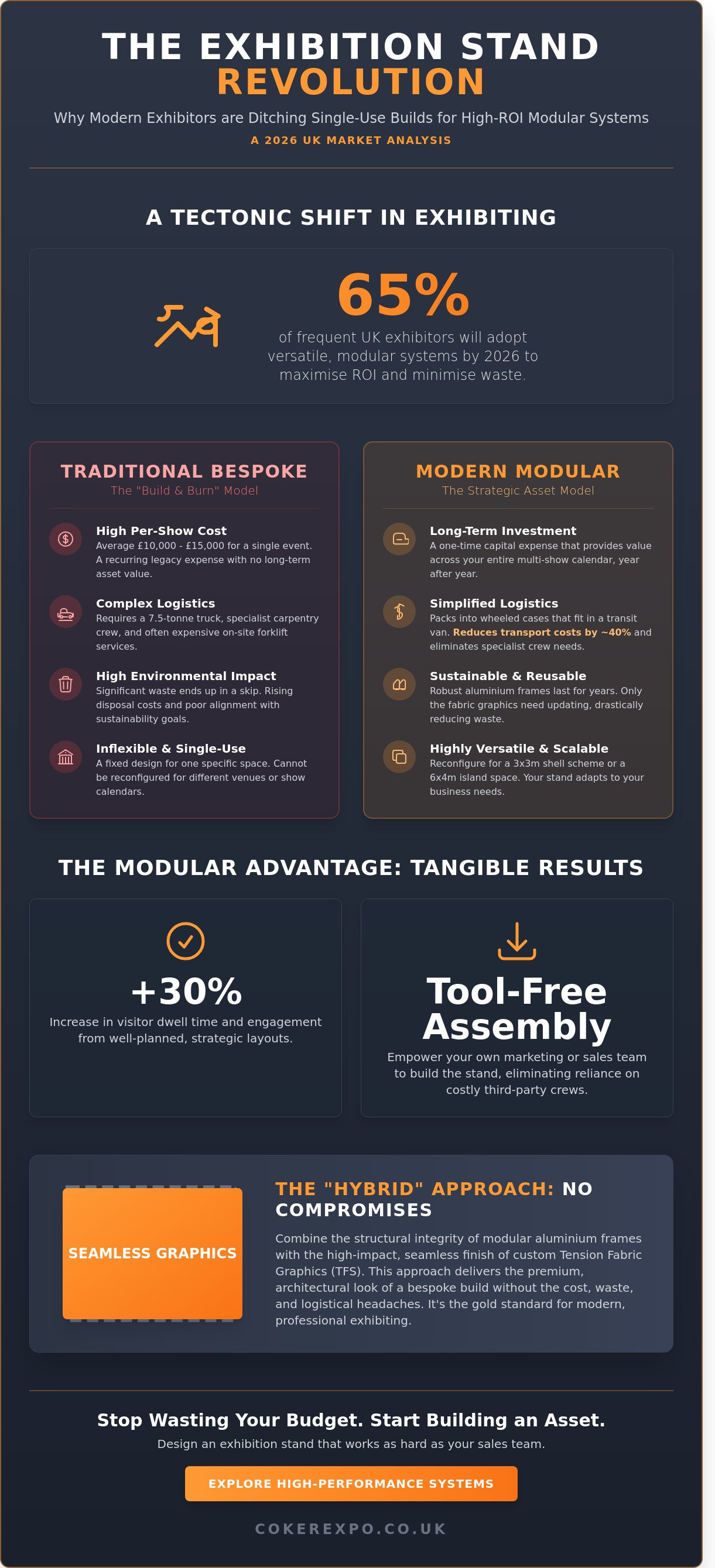
The industry is currently witnessing a significant shift toward "Hybrid Design." This approach combines the structural integrity of modular aluminium frames with the high-impact finish of custom tension fabric graphics. It creates a seamless, premium look that was previously only achievable with expensive, one-off timber builds. By 2026, industry reports suggest that over 65% of frequent exhibitors will adopt these versatile systems to balance aesthetics with operational speed and tool-free assembly.
Beyond Aesthetics: Design as a Marketing Engine
Design dictates how a visitor moves through your space. Effective visual hierarchy uses height, colour, and lighting to pull eyes toward your primary message before guiding them to a product demo or a conversation. This layout directly influences dwell time; well-planned stands can increase engagement levels by 30% compared to cluttered, non-strategic spaces. ROI-driven design is the strategic alignment of floor space costs with lead capture potential. To understand how to choose the right hardware for these goals, consult The Professional Guide to Choosing an Exhibition Stand for Maximum ROI in 2026.
The Shift Toward Reusable and Modular Architecture
The UK exhibition sector is rapidly moving away from the "build and burn" era of timber construction. Environmental regulations and rising waste disposal costs at major venues make single-use stands increasingly difficult to justify. Modular systems offer a robust alternative. They provide the flexibility to reconfigure components for a 3x3m shell scheme one month and a 6x4m island space the next. This adaptability ensures your investment remains relevant across an entire multi-show calendar, providing a sustainable solution that scales with your business growth and reduces your carbon footprint.
Choosing Your Structural Foundation: Bespoke vs. Modular Systems
Your choice of structural foundation dictates your logistical overhead and long-term ROI. Traditional bespoke builds offer unlimited creative scope, yet they often result in "build and burn" waste that no longer aligns with modern sustainability standards. By contrast, modular systems provide a reusable infrastructure that adapts to different floor spaces. Industry data from 2024 indicates that 65% of UK exhibitors now prioritise modularity to meet environmental targets and reduce recurring costs. The "Bespoke-Modular" middle ground is where most high-impact exhibition stand design sits today. This hybrid approach uses standardised aluminium frames dressed in custom-contoured panels or high-specification fabrics. It gives you the aesthetic of a unique, custom build without the £15,000 price tag often associated with single-use timber structures. Logistics play a deciding role in this choice. Moving a bespoke stand typically requires a 7.5-tonne truck and a specialist carpentry crew. Modular systems break down into manageable wheeled cases that fit into a standard transit van. This shift reduces transport costs by approximately 40% and eliminates the need for expensive on-site forklift services. If your 2026 calendar includes three or more events, modularity is a financial necessity rather than just a design preference.Modular and Tension Fabric Systems (TFS)
The mechanics of TFS rely on lightweight aluminium profiles and silicone-edge graphics (SEG). It's the current gold standard for creating seamless, large-format branding. Because the fabric is tensioned from edge to edge, you don't see the vertical joins or "panel gaps" common in older systems. These setups are essential when Designing for the Visitor Experience, as they create immersive, high-definition environments that feel like permanent architectural installations—much like the bespoke aluminium and timber structures seen at grabex.co.uk. Tool-free assembly is a core feature of these systems, allowing your team to handle the build. This can cut on-site labour costs by up to 50% compared to traditional outsourced labour.Scaling with Shell Schemes and Pop-Up Solutions
You shouldn't let a shell scheme limit your brand's presence. You can transform a standard 3m x 3m "box" by lining the walls with high-quality, edge-to-edge graphics that hide the upright poles. For a detailed breakdown of these techniques, see The Ultimate Guide to Shell Scheme Graphic Panels for UK Exhibitors. For smaller satellite events or as components of a larger exhibition stand design, high-spec pop-ups offer unmatched flexibility. You can learn how to choose and use a pop up stand to ensure your portable hardware maintains a premium look. If you're planning your 2026 circuit, we can help you audit your current inventoryTechnical Integration: Illuminating and Structuring Your Brand
Technical elements like lighting and structural framework are the backbone of high-performing exhibition stand design. They shouldn't be treated as "bolt-on" additions during the final hours of a build. Integrating these components during the initial design phase ensures that cables are concealed, power loads are calculated correctly, and the stand remains structurally sound. When you plan technical needs early, you avoid the cluttered, makeshift appearance that often plagues DIY stands.
Illumination serves a biological purpose on the trade show floor, often referred to as the "moth effect." Human eyes are naturally drawn to the brightest point in a hall. Effective lighting doesn't just make your graphics readable; it creates a psychological beacon that pulls visitors toward your space. Beyond visibility, structural height allows you to dominate the eyeline across a crowded venue like the NEC or ExCeL London. A tall, well-lit structure acts as a wayfinding point, making your brand visible from the entrance before a visitor even reaches your aisle.
Safety remains a priority for UK venues. Most major exhibition centres require structural sign-off for any stand exceeding 4 metres in height, classifying it as a "complex" build. You must also consider power consumption. Switching to LED-based systems reduces your draw on venue mains, which can significantly lower your electricity costs. Modern LED setups draw roughly 80% less power than traditional halogen lamps, providing a cooler, safer environment for your staff.
The Power of Backlit Displays and Dynamic Lightboxes
LED lightboxes are a game-changer for visibility. Data suggests that backlit graphics increase brand visibility by up to 40% in high-traffic areas compared to front-lit alternatives. While static lightboxes provide a crisp, premium look, dynamic lightboxes use programmed LED sequences to create movement behind the fabric. This allows you to highlight specific products or simulate motion, making your storytelling more immersive. For a deeper look at these systems, read The Ultimate Guide to Exhibition Lightboxes: Illuminating Your Brand in 2026.
Utilising Truss and Gantry for Structural Authority
Exhibition truss offers a robust solution for brands needing to support heavy LED screens or create an industrial aesthetic. Gantry systems are particularly effective for creating "open-air" stands. These structures provide the necessary height and rigging points for lighting without the need for heavy, solid walls that block sightlines. This creates an inviting, accessible environment that still feels authoritative. You can find technical specifications and build ideas in our guide, Truss Truss: The Ultimate Guide to Exhibition & Event Structures in 2026.
Designing for the Visitor Experience and Engagement
Effective exhibition stand design relies on the 3-second rule. Visitors decide to engage or bypass your stand in the time it takes to walk three paces. Your value proposition must be visible from five metres away, using high-contrast typography and clear messaging that answers the visitor's primary needs immediately. If they can't understand what you do at a glance, they won't stop.
To manage traffic effectively, you should apply the "Zoning" model. Divide your floor plan into three functional areas. The Attract zone sits at the aisle edge, using sensory hooks like motion graphics or bright lighting to stop foot traffic. The Engage zone centres around a counter or demo station where staff initiate conversations. Finally, the Convert zone provides a semi-private meeting area for detailed negotiations; incorporating high-quality furniture from The Mensa Table Company in this space helps create a professional atmosphere that encourages deal-closing. This logical flow prevents bottlenecks and ensures your sales team can qualify leads without blocking the entrance to the stand.
Flooring and tactile materials define your physical footprint. Raised platforms or high-quality carpets create a psychological transition from the hard venue floor to your brand environment. Using premium materials like wood grain finishes or tension fabric walls adds a layer of quality that reinforces brand trust. Integrate AV elements like LED screens flush with the wall panels to maintain a clean, professional aesthetic. Messy cables and bulky TV stands are a distraction that can undermine a high-end exhibition stand design.
Optimising Sightlines and Footfall Flow
Map your visitor journey by identifying the primary approach angles at the venue. Avoid the "barrier effect" created by placing large counters directly across the front of your space. This creates a physical and psychological wall that discourages entry. Instead, angle counters to pull visitors into the stand. Use graphics at various heights to capture attention. High-level branding targets visitors across the hall, while eye-level displays provide technical detail. For detailed specifications on graphic dimensions, consult our A0 Size Guide: Dimensions, Specs, and Exhibition Display Best Practices.
Lessons from High-Impact Brand Activations
Premium brands treat their stands as immersive environments rather than just product displays. They use theatrical lighting and spatial storytelling to create a memorable experience. This approach is highly effective for B2B brands looking to stand out in a crowded hall. You can adapt these high-octane principles by focusing on sensory engagement and dynamic movement. For a deeper look at how to translate professional racing aesthetics into trade show success, read our analysis on Formula 1 Exhibition Design: Lessons in High-Octane Brand Impact for 2026.
Ready to transform your event presence?
Explore our modular display systems and bespoke stand services.
Navigating the UK Exhibition Design Process Successfully
Executing a successful exhibition stand design requires a disciplined workflow that bridges the gap between creative vision and physical reality. The process begins with a technical brief that defines your floor space, visitor flow, and functional requirements. From here, a 3D render allows you to visualise the structure before a single piece of hardware is selected. In the UK market, lead times are critical. While hardware is often available from stock, custom graphics typically require a 7 to 10-day production window. During peak seasons like March or October, these windows can stretch, so early finalisation of artwork is vital to avoid express shipping surcharges.
A "Pre-Build" test is the most effective way to eliminate on-site stress. This involves assembling the full structure at the production facility to ensure every tension fabric graphic fits the frame perfectly. It confirms that the tool-free assembly works as intended, allowing your team to focus on lead generation rather than troubleshooting mechanical issues on the morning of the show. For a truly seamless event, follow this final checklist:
- Logistics: Confirm venue loading bay slots at least three weeks in advance.
- Documentation: Keep digital and physical copies of fire certificates for all fabric materials.
- Storage: Use wheeled, rotomoulded cases to protect hardware during transit.
- On-site Management: Pack a basic kit including spare silicone edging, microfibre cloths for graphics, and extra cable ties.
Choosing the Right Exhibition Stand Designers
Selecting a partner requires a balance between technical engineering knowledge and creative flair. A designer who understands UK fire regulations and structural integrity is just as important as one who can create a striking visual. Local UK-based production offers a significant advantage, providing faster turnarounds and tighter quality control over the sublimation printing process. For a deeper dive into vetting your partners, see our guide on Choosing the Right Exhibition Stand Designers: A Professional Checklist for 2026.
Logistics and Reusability: The Practical Specialist Approach
Modern exhibition stand design focuses heavily on portability. Modular systems are engineered to collapse into compact components that fit into a standard estate car or small van, which removes the need for expensive dedicated freight. Managing the lifecycle of your graphics is equally important. To ensure longevity, always store fabric graphics folded with the print side inward and clean any marks with a damp, lint-free cloth. Tool-free assembly is the single most important factor for small marketing teams because it eliminates the need for expensive third-party contractors and heavy toolkits. This approach ensures your investment remains versatile for years, allowing you to swap graphics or reconfigure frames for different floor plan sizes without purchasing entirely new systems.
Securing Your Competitive Edge for the 2026 Trade Show Season
Success on the trade show floor requires more than a physical presence; it demands a technical strategy that prioritizes visitor flow and brand visibility. Your choice between bespoke builds and modular systems dictates your ROI, especially as 2026 trends lean toward sustainable, reusable hardware. Professional exhibition stand design must integrate seamless lighting and tool-free assembly to ensure your team focuses on leads rather than logistics. Navigating the UK exhibition landscape is simpler when you partner with experts who understand the pressure of strict deadlines and complex hall regulations.
Coker Expo brings over 25 years of UK exhibition expertise to every project. We specialize in tool-free modular systems that offer the impact of a custom build without the high labor costs. Our in-house UK production facility guarantees a fast turnaround, giving you peace of mind that your hardware will arrive on time and ready for action. Whether you're heading to ExCeL London or the NEC Birmingham, we provide the robust infrastructure needed to turn passersby into loyal customers. Explore CokerExpo’s Professional Exhibition Stand Design Services to start your next project today. Your brand deserves a stand that works as hard as you do.
Frequently Asked Questions
How much does exhibition stand design cost in the UK for 2026?
Exhibition stand costs in the UK for 2026 vary based on the build type. Industry data suggests a budget of £350 to £750 per square metre for mid-range custom stands. For a standard 3m x 3m modular setup, exhibitors should budget between £2,500 and £5,000 for hardware and graphics. These figures reflect current material costs and the 5% annual inflation seen in the UK events sector.
What is the difference between a modular stand and a custom-built stand?
Modular exhibition stand design uses interchangeable components like aluminium frames and tension fabric to create scalable displays. These systems offer tool-free assembly and fit various floor sizes. Custom-built stands are bespoke structures designed for a single event, often using timber and specialist finishes. While custom builds offer unique shapes, modular systems provide better long-term ROI because you can reuse the hardware across multiple shows.
How far in advance should I start my exhibition stand design process?
Start your exhibition stand design process at least 4 to 6 months before your event. This timeline allows 4 weeks for initial concept development and 8 weeks for technical drawings and approvals. Early planning ensures you secure better rates from contractors and avoid late-order surcharges from venue organisers. It also provides a buffer for graphic production and pre-build testing at our UK facility to guarantee everything fits perfectly.
Can I reuse my exhibition stand design for different floor space sizes?
You can adapt your design if you invest in a modular system like a gantry or tension fabric frame. These systems allow you to add or remove sections to fit a 3m x 3m corner plot or a 6m x 12m island site. By reconfiguring the existing hardware and updating specific graphic panels, you maintain brand consistency while reducing costs. This flexibility makes modular hardware a superior investment compared to fixed-size custom builds.
What are the UK fire safety regulations for exhibition graphics and fabrics?
All fabrics and graphics used in UK exhibitions must be flame retardant to BS 5867 Part 2 Type B or the European equivalent EN 13501-1. Venue organisers require a certificate of fire protection before you can install your display. We use dye-sublimation printing on inherently flame-retardant materials to ensure compliance. Failure to provide valid certification can result in the venue team refusing to let you open your stand to visitors.
Do I need a professional designer for a shell scheme stand?
While you don't strictly need a designer for a basic shell scheme, professional input ensures your graphics work within the constraints of the aluminium uprights. A designer helps you maximise the limited 9 square metres typically provided by choosing the right lighting and high-impact visuals. They ensure your branding isn't obscured by furniture or structural poles. Using a professional approach transforms a standard booth into a high-performing lead generation tool.
How can I make my exhibition stand more sustainable?
Sustainability in stand design is achieved by choosing reusable aluminium frames over single-use timber structures. You can reduce waste by 80% when you opt for interchangeable fabric graphics instead of foamex boards. Switching to low-energy LED lighting and using PVC-free materials further lowers your carbon footprint. Many UK venues now mandate a waste management plan, so investing in durable, multi-use hardware is both environmentally responsible and cost-effective.
What is a tension fabric system (TFS) in stand design?
A tension fabric system (TFS) consists of an aluminium frame with a narrow groove that holds a silicone edge graphic (SEG). The fabric is stretched tight across the frame to create a perfectly flat, seamless surface that looks like a solid wall. It's a popular choice because it's lightweight, easy to install without tools, and eliminates the visible joins found in traditional panel systems. This creates a clean, high-end finish for any brand.
Leave a comment