

Animated Lightbox Display for Events: The Professional Guide to Dynamic Branding
If you think the only way to capture attention in a crowded exhibition hall is by hauling in heavy, expensive LED screens, you're overlooking a more efficient solution. An animated lightbox display for events offers a sophisticated middle ground, blending the high-impact movement of digital signage with the refined aesthetic of tension fabric systems. It's the "Goldilocks" of event technology: more engaging than a static frame, yet significantly more portable than a digital wall.
We understand the frustration of watching potential leads walk past a static display that cost a fortune to ship and install. You're likely looking for a way to stand out without the logistical stress of high drayage costs or the complexity of specialized programming. This guide will show you how to secure a high-performance presence on the trade show floor using lightweight, programmable hardware that's designed for rapid assembly and easy transport.
We'll break down how these dynamic systems use programmable pixel ladder lights and interchangeable fabric graphics to provide a versatile, professional branding tool that evolves with your marketing needs.
Key Takeaways
- Learn why motion is essential for capturing attention in high-competition environments and how it overcomes the visibility limitations of traditional static signage.
- Understand the internal technology of an animated lightbox display for events, including the "pixel-as-LED" concept that creates high-impact movement behind textile surfaces.
- Discover how to reduce logistical overhead by choosing lightweight fabric systems over heavy LED video walls without sacrificing visual impact.
- Identify the best design practices for layering static and moving elements to create professional effects like glowing logos and flowing light patterns.
- Explore the technical specifications of the HueBox range and the advantages of sourcing expert-built display systems from a reliable UK-based manufacturer.
The Evolution of Event Signage: Why Static is No Longer Enough
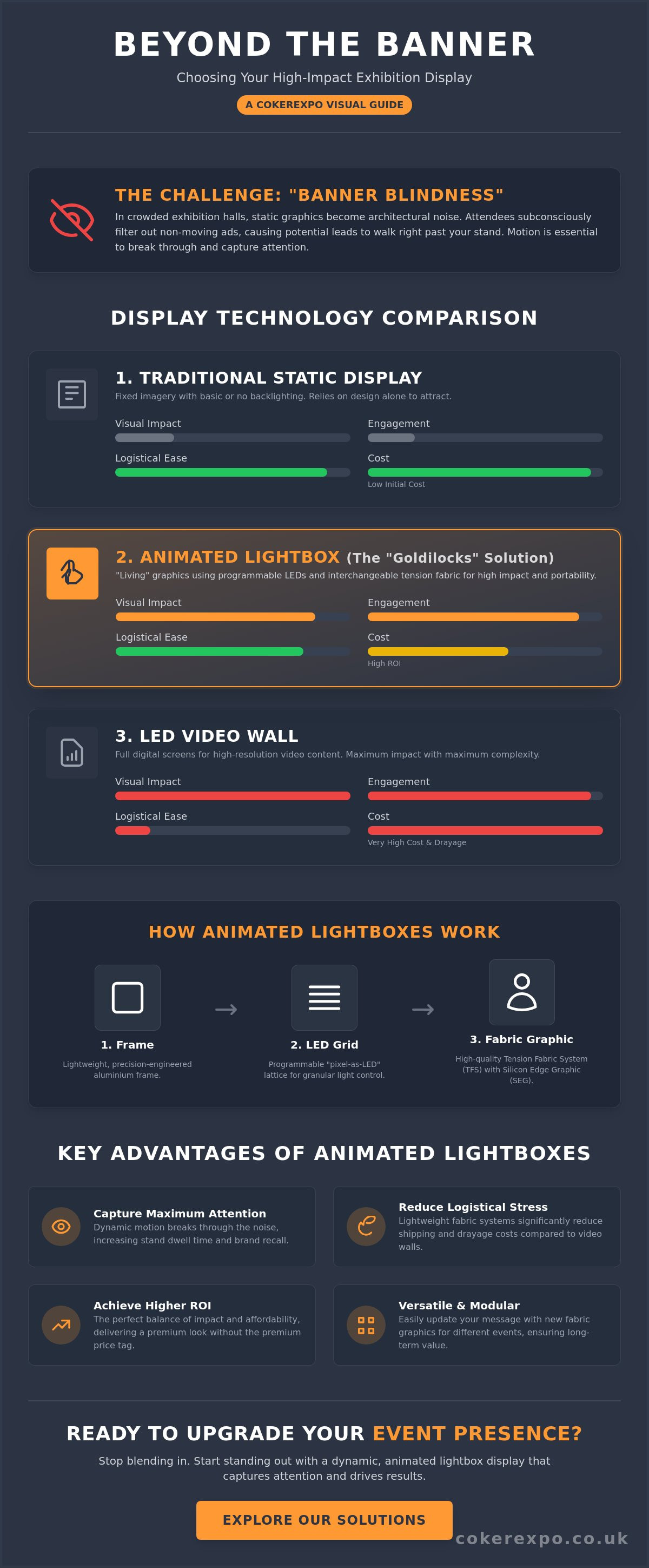
Traditional event signage is facing a crisis of visibility. In a crowded exhibition hall, static graphics often blend into the background, becoming part of the architectural noise rather than a focal point. This phenomenon occurs when attendees subconsciously filter out non-moving advertisements. To break through this mental barrier, an animated lightbox display for events leverages the human brain's natural hardwiring to prioritize movement. Our eyes are evolutionarily designed to track motion in our peripheral vision, making dynamic displays significantly more effective at stopping foot traffic than their fixed counterparts.
A dynamic lightbox represents the modern intersection of high-quality textile printing and programmable LED technology. Unlike a standard backlit frame that simply provides illumination, these systems use light to tell a story. Animation reinforces brand storytelling by guiding the viewer's eye through a specific sequence of information. This isn't just about being bright; it's about being strategic. By using light to simulate depth, texture, or movement, a brand can communicate complex value propositions without requiring the attendee to read a single line of small-print copy.
Overcoming "Banner Blindness" at Trade Shows
Recent observations of attendee behavior suggest that dwell time increases substantially when a display features subtle, rhythmic motion. Static banners are often ignored because they lack the "interrupt" factor required to break a visitor's stride. By 2026, event trends have shifted heavily toward "living" graphics. These displays use peripheral motion to snag attention from across the hall, drawing visitors toward the stand before they've even consciously processed the brand's logo. It's a practical solution for high-competition environments where every square inch of the floor is a battle for engagement.
The Shift from Illumination to Communication
We've moved beyond the era where "bright" was sufficient. Modern exhibitors are transitioning from simple white LED backlighting to "smart" systems that utilize Digital Signage Technology principles within a fabric frame. These programmable RGB arrays allow the light itself to become a communicative tool. For example, instead of just lighting a graphic of a car, a dynamic system can simulate the flow of air over the chassis or the glow of the headlights. This transition from basic lighting to sophisticated, programmable arrays turns a piece of hardware into a high-performance business investment that captures and holds interest far longer than a traditional lightbox ever could.
- Static: Fixed imagery that relies on external lighting or basic backlighting.
- Dynamic: "Living" graphics that use light to create the illusion of movement.
- Result: Increased stand dwell time and higher brand recall.
How Animated Lightbox Displays Work: The Technology Explained
Understanding the internal mechanics of an animated lightbox display for events is essential for any manager looking to invest in long-term exhibition infrastructure. At its core, the system consists of a precision-engineered aluminium frame that houses a lattice of programmable LED modules. Unlike traditional lightboxes that use a handful of perimeter lights, these dynamic systems use a dense grid of LEDs where each light acts as a single pixel. This "pixel-as-LED" approach allows for granular control over the entire surface area of the display, turning a standard fabric graphic into a responsive digital canvas.
The "brain" of the system is the integrated controller unit. Most professional setups utilise an SD card interface or DMX protocols to trigger pre-programmed light loops. This ensures that the animation remains consistent throughout the event without requiring a permanent connection to a laptop or external media player. Because these systems are designed for high-traffic environments, they are engineered for efficient heat management and low power draw. Most units run on standard 110v or 240v power, making them compatible with basic venue electrical packages. If you are looking to upgrade your current stand, exploring our range of dynamic lightboxes provides a clear path toward more engaging hardware.
Tension Fabric Systems (TFS) and Silicon Edge Graphics (SEG)
The visual success of an animated display relies heavily on the quality of the textile. We utilise high-density dye-sublimation printing because it allows light to disperse evenly across the fabric without "hot spotting." A critical component of these setups is the light-blocking layer, often called a "black-back." This ensures that the light patterns only move forward through the graphic, preventing any distracting glow from leaking out the rear of the frame. One of the most practical advantages for event managers is the ease of graphic changeovers. You can retain the expensive LED hardware and aluminium frame for years, simply updating the SEG fabric to reflect new campaigns or product launches.
Programmable LEDs vs. Standard RGB
It's important to distinguish between simple colour-changing RGB lights and true programmed animation. Standard RGB systems can shift the entire display from red to blue, but they cannot create movement. Programmable LEDs allow for specific "paths" of light to travel across the frame. This is dictated by pixel pitch, which refers to the distance between each LED. A tighter pixel pitch results in smoother, more fluid motion that looks professional even at close range. Dynamic animation is the synchronisation of light patterns with static print elements. This technological shift aligns with the Top Five Trends in Digital Signage, where hardware is increasingly expected to provide more than just static illumination.
- Aluminium Frame: The durable, lightweight skeleton of the display.
- LED Lattice: A grid of programmable lights acting as individual pixels.
- Controller Unit: The hardware that stores and executes the animation loops.
- SEG Fabric: The high-resolution graphic that brings the light to life.
Animated Lightboxes vs. LED Video Walls: Choosing the Right ROI
Deciding between a full-scale LED video wall and an animated lightbox display for events often comes down to a choice between raw pixel power and practical operational efficiency. While LED walls offer high-resolution video, they carry significant weight and logistical burdens that can drain an event budget before the doors even open. In contrast, dynamic lightboxes provide a lightweight alternative that achieves a similar visual impact with a fraction of the shipping and drayage costs. This shift is part of a broader trend in The Evolution of Event Signage, where professionals are increasingly seeking solutions that balance high-end technology with manageable on-site requirements.
The resilience of aluminium frames and tension fabric also offers a durability advantage in high-traffic exhibition halls. Unlike modular LED panels, which are susceptible to dead pixels and fragile connection points, a fabric display is robust. If a graphic is bumped or scratched, the damage is often negligible or easily fixed by swapping the textile. This makes the system a sound long-term business investment for companies that attend multiple shows per year. It's a smart trade. The math is simple. Setup is fast.
Cost Per Square Metre: A Strategic Breakdown
When evaluating the initial investment, dynamic lightboxes often present a more favourable ROI for smaller to mid-sized teams. The setup doesn't require specialized rigging crews or expensive technical support. You aren't just saving on the hardware; you're reducing energy consumption and eliminating the recurring costs of heavy-duty transport. Updating your message is as simple as ordering a new SEG graphic, whereas video walls often require professional content creators to reformat files for specific modular configurations.
The Aesthetic Advantage of Textile
One of the most immediate benefits of fabric is the elimination of visible "grid lines" common in modular LED panels. An animated lightbox display for events provides a seamless, edge-to-edge visual that feels like a natural part of your stand's architecture. The light is diffused through the textile, removing the harsh glare and heat associated with direct-view LED pixels. This creates a premium, tactile brand experience that mirrors high-end retail environments. It invites attendees to approach the display without the eye strain often caused by bright digital screens.
- Portability: Fabric systems pack into compact cases, reducing shipping fees.
- Setup: Most frames are tool-free and can be assembled by a two-person team.
- Visuals: Soft, diffused light creates a sophisticated and integrated look.
- Longevity: Durable hardware supports years of graphic updates.
Best Practices for Designing Graphics for Dynamic Animation
Investing in an animated lightbox display for events is only the first step toward stand dominance. The hardware provides the platform, but the content strategy determines your actual return on investment. Designing for dynamic fabric requires a different mindset than designing for static print or traditional video screens. You aren't just creating a graphic; you're orchestrating an interaction between ink, fabric, and light. Subtle motion sells. When done correctly, the animation guides the viewer’s eye exactly where you want it to go, without the jarring glare of a digital monitor.
Effective layering is the foundation of a professional display. We recommend keeping your primary branding, such as logos and core value propositions, static. This ensures constant legibility from any angle. Use the programmable LED array to animate the background or secondary elements. Simulating natural movements like water ripples, flowing clouds, or a soft "breathing" glow behind a logo creates a sophisticated atmosphere. These effects add depth to the textile surface, making the display feel like a high-end retail installation rather than a standard trade show banner.
Color choice and ink density are equally critical. Darker colors and heavy black inks block more light, while lighter tones and white space allow the LEDs to shine through with greater intensity. If you want a specific element to "pop," use a lighter color in that area of the design to maximise the backlight's effectiveness. Avoid visual clutter. Professional authority is maintained through clean layouts where the motion serves a purpose, such as highlighting a new product feature or directing the eye toward your stand entrance. If you need assistance with your layout, you can view our range of dynamic lightboxes to see how different designs interact with our hardware.
Storyboarding Your Animation Loop
Most attendees spend between 15 and 30 seconds passing by a stand. Your animation loop should be concise and impactful within this window. Use rhythmic light pulses to draw attention to your Call-to-Action (CTA) areas, such as a website URL or a "Visit Us" prompt. Incorporate areas of low ink density to create windows of high-intensity light that maximise the impact of the underlying LED array. This technique ensures that even a quick glance captures the most important parts of your message.
Technical Specs for Artwork Handover
Large-format tension fabric requires high-resolution files, typically 100 to 150 DPI at full size, to ensure crisp imagery. When preparing your files, you must coordinate with the manufacturer on LED mapping and zones. This ensures that the light patterns align perfectly with the printed elements on the fabric. Consistency is key. Ensure your brand colors are colour-matched across both illuminated and non-illuminated stand elements to maintain a unified, professional appearance across your entire event presence.
- Static Elements: Logos, contact info, and core text for maximum legibility.
- Dynamic Elements: Background textures, light "breathing" effects, and CTA highlights.
- Resolution: High-DPI files to prevent pixelation on large fabric surfaces.
- Contrast: Use light and dark areas to control how the backlight interacts with the ink.
Implementing Animated Displays with CokerExpo Solutions
CokerExpo provides the technical foundation needed to deploy these systems effectively. Our HueBox range is engineered to meet varying event requirements, from the streamlined Lite models to the high-performance Pro RGB animated systems. These aren't generic imports. We manufacture and assemble with a focus on durability and ease of use, ensuring that your animated lightbox display for events performs flawlessly from the moment the hall opens. Based in Hampshire, we offer national UK delivery and provide a level of technical expertise that only comes from years of on-site experience.
Success on the event floor requires more than a standalone unit. We focus on how these displays integrate into your broader exhibition stand design. For larger footprints, we often combine dynamic lightboxes with truss truss systems to create massive, illuminated backdrops. Our bespoke sizing capabilities allow us to produce continuous animated walls without distracting seams, providing a clean, architectural finish that reinforces your brand's authority. When you deploy an animated lightbox display for events, you need a partner that understands the high-pressure environment of the trade show floor.
From Shell Schemes to Custom Island Stands
Smaller stands shouldn't miss out on high-impact technology. We've adapted our systems to work seamlessly with shell scheme graphic panels, allowing exhibitors in standard 3x3m plots to dominate their aisles. A freestanding HueBox unit acts as a promotional beacon, cutting through the visual clutter of neighbouring stands. By choosing CokerExpo, you're gaining more than a hardware vendor. You're partnering with a team that understands event management and planning, ensuring your logistics are as smooth as your display's animation.
Ready for Your Next Event?
Efficiency is our hallmark. Custom animated fabric prints are produced with industry-leading lead times, ensuring you're ready for even the tightest deadlines. We offer both rental and purchase options for our dynamic hardware, providing the flexibility to scale your presence based on the specific show requirements. If you're unsure about the technical requirements for your next project, our team is available for a comprehensive technical feasibility review. We'll help you determine the best configuration for your space and branding goals.
- HueBox Range: Scalable solutions from portable Lite units to Pro RGB systems.
- Integration: Seamless compatibility with truss structures and shell schemes.
- Bespoke Sizing: Custom frames manufactured to your exact stand dimensions.
- Reliability: Hampshire-based production with a focus on rapid UK fulfillment.
Elevate Your Exhibition Presence with Dynamic Motion
Success at a trade show requires more than just being present; it requires being noticed. We've seen how integrating motion into your stand overcomes attendee banner blindness and why fabric systems offer a far more practical ROI than heavy digital walls. By following professional design practices, you can turn a standard graphic into a high-performance communication tool that holds interest and drives engagement.
CokerExpo provides the essential infrastructure for this success. With over 25 years of exhibition expertise, we are specialists in custom-sized dynamic displays designed for the rigours of the event floor. Our UK-based manufacturing and support mean you receive reliable hardware that's simple to transport and assemble. An animated lightbox display for events represents a sound business investment that will serve your brand for years to come.
Ready to dominate the floor? Explore the HueBox Animated Lightbox Range at CokerExpo and secure a display that works as hard as your team does. Your next show is the perfect opportunity to leave static signage behind and embrace the future of event branding.
Frequently Asked Questions
How do animated lightboxes differ from standard LED lightboxes?
Standard lightboxes provide uniform, static backlighting to illuminate a graphic from behind. An animated lightbox display for events utilizes a programmable lattice where each LED acts as an individual pixel. This technology allows for specific light patterns and movement to be synchronized with your printed fabric, turning a static image into a dynamic communication tool.
Do I need a special technician to set up an animated display at an event?
You don't need a specialist technician for installation. These units are engineered for tool-free assembly, featuring modular aluminium frames that slot together simply. Most managers find that a two-person team can have a full-size display ready for the hall floor in under thirty minutes, significantly reducing your on-site labour requirements.
Can I change the graphics on my dynamic lightbox for different trade shows?
Yes, the graphics are completely interchangeable. The system uses Silicon Edge Graphics (SEG) that press into the frame's perimeter channel. This allows you to retain the expensive LED hardware and aluminium frame for years, simply ordering new fabric prints to reflect different marketing campaigns or specific product launches.
Are animated lightboxes energy-efficient for multi-day exhibitions?
These systems are highly efficient due to their LED components. They typically run on a standard 110v or 240v power supply, making them compatible with basic venue electrical packages. The low heat output also ensures they remain safe for continuous operation throughout multi-day exhibitions without the risk of overheating or excessive power draw.
What file formats are required for designing animated lightbox graphics?
For the fabric print, we require high-resolution PDF, TIFF, or AI files at 100 to 150 DPI at full size. The animation itself is handled via an integrated controller. We map the light patterns to your specific artwork during the production phase to ensure the movement perfectly highlights your key branding elements.
How heavy are animated lightboxes compared to traditional displays?
Animated lightboxes strike a practical balance between durability and portability. While they are slightly heavier than a non-illuminated fabric frame due to the internal LED lattice, they remain significantly lighter than modular LED video walls. Most units pack into compact cases that are easy to transport and store between events.
Can animated lightboxes be wall-mounted or are they only freestanding?
Our frames are versatile and support both configurations. You can use stable feet for a freestanding promotional beacon or utilize mounting brackets to secure the frame to a wall or a shell scheme structure. This flexibility makes an animated lightbox display for events a sound investment for varied stand layouts and footprints.
Is it possible to synchronise multiple lightboxes to create a larger animated wall?
Synchronisation is a standard feature for larger installations. By daisy-chaining the controller units, you can coordinate light patterns across several frames to create a seamless, large-scale animated wall. This is an effective strategy for creating high-impact backdrops on custom island stands where a continuous visual narrative is required.
Leave a comment